


The Role of Nature in Reducing Burnout and Boosting Productivity
Employee mental health has become one of the defining leadership challenges of modern business. Organizations across industries are navigating rising burnout, chronic stress, emotional fatigue, disengagement, and increasing pressure on employee wellness programs. At the same time, leaders are being asked to improve productivity, strengthen culture, retain talent, and drive innovation in environments that often feel increasingly demanding and overstimulating.
As a result, many organizations are rethinking what workplace wellness actually means. The conversation is shifting beyond reactive solutions and moving toward proactive, science-backed strategies that support how people think, feel, and perform every day. One of the most compelling (and surprisingly overlooked) areas of research involves something incredibly simple: plants, nature, and green spaces.
What once may have been viewed as purely aesthetic is now being supported by neuroscience, psychology, and workplace performance research. Studies continue to show that interaction with plants and natural environments can positively influence stress levels, focus, creativity, emotional well-being, and even organizational performance.
For leaders, this creates an important opportunity. The future of workplace wellness may not only depend on technology, policies, and benefits packages. It may also depend on how intentionally organizations design environments that support the human brain.
The Workplace Mental Health Challenge
Mental
health
concerns
are
no
longer
isolated
HR
issues.
They
are
business
issues..jpg)
Chronic stress and burnout directly affect:
- Productivity
- Decision-making
- Collaboration
- Creativity
- Innovation
- Absenteeism
- Retention
- Workplace culture
Employees today are operating in environments filled with constant digital stimulation, rapid communication cycles, information overload, and increasing demands for performance. While organizations have invested heavily in efficiency and connectivity, many have unintentionally created conditions that keep the nervous system in a prolonged state of stress. The consequences are measurable.
Research consistently shows that prolonged stress impacts cognitive performance, emotional regulation, focus, and overall engagement. When stress becomes chronic, organizations often see declines in morale, creativity, and workplace satisfaction long before formal burnout appears. This is why proactive wellness strategies matter.
The organizations leading the next era of workplace wellness are recognizing that employee performance cannot be separated from employee well-being.
The Neuroscience Behind Nature and Mental Wellness
Over the past decade, neuroscience research has increasingly supported the idea that humans are biologically wired to respond positively to natural environments. This concept is often referred to as “biophilia,” the innate human connection to nature.
While modern workplaces are dominated by screens, artificial lighting, enclosed spaces, and continuous digital input, the human brain evolved in outdoor environments rich in natural sensory experiences. Researchers now believe this disconnect may contribute to rising levels of mental fatigue and stress. Interaction with plants and nature appears to help regulate the nervous system in measurable ways.
Studies
have
shown
that
exposure
to
greenery
can:
- Lower cortisol levels
- Reduce blood pressure
- Improve emotional regulation
- Support concentration and focus
- Increase feelings of calm
- Reduce mental fatigue
- Improve overall mood
These effects are not simply subjective. Many are physiologically measurable. In workplace settings, this becomes especially important because stress-related cognitive fatigue has become one of the greatest barriers to sustained performance.
Why Plants Matter in Workplace Design
For years, workplace design largely focused on efficiency and functionality. Today, organizations are beginning to understand that the physical environment also shapes emotional and cognitive performance. Research on biophilic workplace design (the integration of natural elements into built environments) has produced compelling findings.
Employees working in environments with plants and natural elements often report:
- Higher workplace satisfaction
- Lower stress levels
- Better concentration
- Improved creativity
- Greater emotional well-being
Some studies have even linked greener office environments to increased productivity and enhanced problem-solving capabilities. Why? Because natural environments appear to help restore cognitive resources that become depleted during periods of sustained concentration and stress. In practical terms, plants may help employees think more clearly.
Stress Reduction and Cognitive Recovery
One of the most significant benefits of nature-based wellness strategies is their impact on stress recovery. When individuals experience prolonged stress, the body remains in a heightened physiological state. Cortisol levels remain elevated, attention becomes fragmented, and mental fatigue accumulates. Natural environments appear to interrupt that cycle.
Research has shown that interaction with plants (whether through viewing greenery, caring for plants, or spending time outdoors) can help activate the parasympathetic nervous system, often referred to as the body’s “rest and recover” system.
This matters because cognitive recovery is essential for:
- Strategic thinking
- Innovation
- Communication
- Emotional intelligence
- Leadership performance
Employees cannot consistently perform at high levels if the nervous system never fully resets.
Creativity, Innovation, and Green Spaces
 Organizations
focused
on
innovation
should
pay
close
attention
to
the
growing
research
connecting
nature
and
creativity.
Creative
thinking
depends
heavily
on
cognitive
flexibility,
the
brain’s
ability
to
make
new
connections,
adapt,
and
generate
fresh
ideas.
Chronic
stress
narrows
attention
and
reduces
that
flexibility.
Nature
appears
to
create
the
opposite
effect.
Organizations
focused
on
innovation
should
pay
close
attention
to
the
growing
research
connecting
nature
and
creativity.
Creative
thinking
depends
heavily
on
cognitive
flexibility,
the
brain’s
ability
to
make
new
connections,
adapt,
and
generate
fresh
ideas.
Chronic
stress
narrows
attention
and
reduces
that
flexibility.
Nature
appears
to
create
the
opposite
effect.
Research suggests that employees working in environments enriched with greenery often demonstrate stronger creative problem-solving abilities and improved mental clarity. For leadership teams, this is particularly relevant in industries where innovation, collaboration, and strategic thinking drive competitive advantage. Sometimes the most effective way to improve performance is not to increase pressure, but to improve the environment in which thinking happens.
The Link Between Air Quality and Employee Well-Being
Indoor air quality is another often-overlooked factor in workplace wellness. Many employees spend the majority of their day indoors in environments that contain poor ventilation, airborne pollutants, artificial climate control, and limited natural airflow. These conditions can contribute to headaches, fatigue, respiratory irritation, and difficulty concentrating. Certain indoor plants help improve environmental quality by naturally filtering some airborne toxins and increasing oxygen circulation.
Research has associated greener environments with:
- Reduced fatigue
- Fewer headaches
- Improved comfort
- Better perceived well-being
When employees physically feel better throughout the day, both morale and performance tend to improve.
Why Gardening and Outdoor Interaction Matter Too
While indoor plants offer meaningful benefits, organizations are also beginning to explore broader nature-based wellness initiatives that encourage outdoor interaction and gardening activities. Community gardens, outdoor wellness spaces, rooftop gardens, walking paths, and employee gardening programs are becoming increasingly common in wellness-forward organizations.
 Why?
Because
gardening
combines
several
evidence-based
wellness
drivers
simultaneously:
Why?
Because
gardening
combines
several
evidence-based
wellness
drivers
simultaneously:
- Physical movement
- Sunlight exposure
- Mindfulness
- Sensory engagement
- Cognitive restoration
- Emotional regulation
Gardening also introduces an element of purpose and visible progress. Employees engage in an activity that produces tangible growth over time; a psychologically rewarding experience in environments that can otherwise feel abstract or high-pressure.
The Surprising Science of Soil and Serotonin
One of the more fascinating discoveries in recent wellness research involves a naturally occurring soil bacterium called Mycobacterium vaccae. Researchers have found that exposure to this microorganism may stimulate serotonin production in the brain. Serotonin is associated with emotional stability, mood regulation, and feelings of well-being.
While gardening is not a substitute for clinical mental health treatment, the findings reinforce an important point: human interaction with natural environments may have deeper biological effects than previously understood. In many ways, the brain appears to respond positively to the very environments modern work culture has minimized.
Nature as a Leadership Strategy
For executives and leadership teams, workplace wellness initiatives are often evaluated through the lens of outcomes:
- Retention
- Engagement
- Productivity
- Healthcare costs
- Culture
- Performance
Nature-based wellness strategies support all of these areas while remaining relatively accessible and scalable. Importantly, they also communicate something meaningful to employees: that the organization recognizes employees as humans, not simply producers of output. Workplace culture is shaped not only by leadership communication, but by environmental signals. The design of a workplace sends messages about priorities, values, and expectations.
Environments that incorporate natural elements often feel calmer, more welcoming, and more human-centered. That matters.
Practical Ways Leaders Can Integrate Nature Into Workplace Wellness
Organizations do not need massive budgets or complete office redesigns to begin implementing these ideas. Small, intentional changes can create meaningful impact over time.
1. Introduce Greenery Throughout the Workplace
Add plants to:
- Offices
- Conference rooms
- Reception areas
- Break rooms
- Collaborative spaces
Low-maintenance plants can provide benefits without creating operational burden.
2.
Create
Dedicated
Wellness
Spaces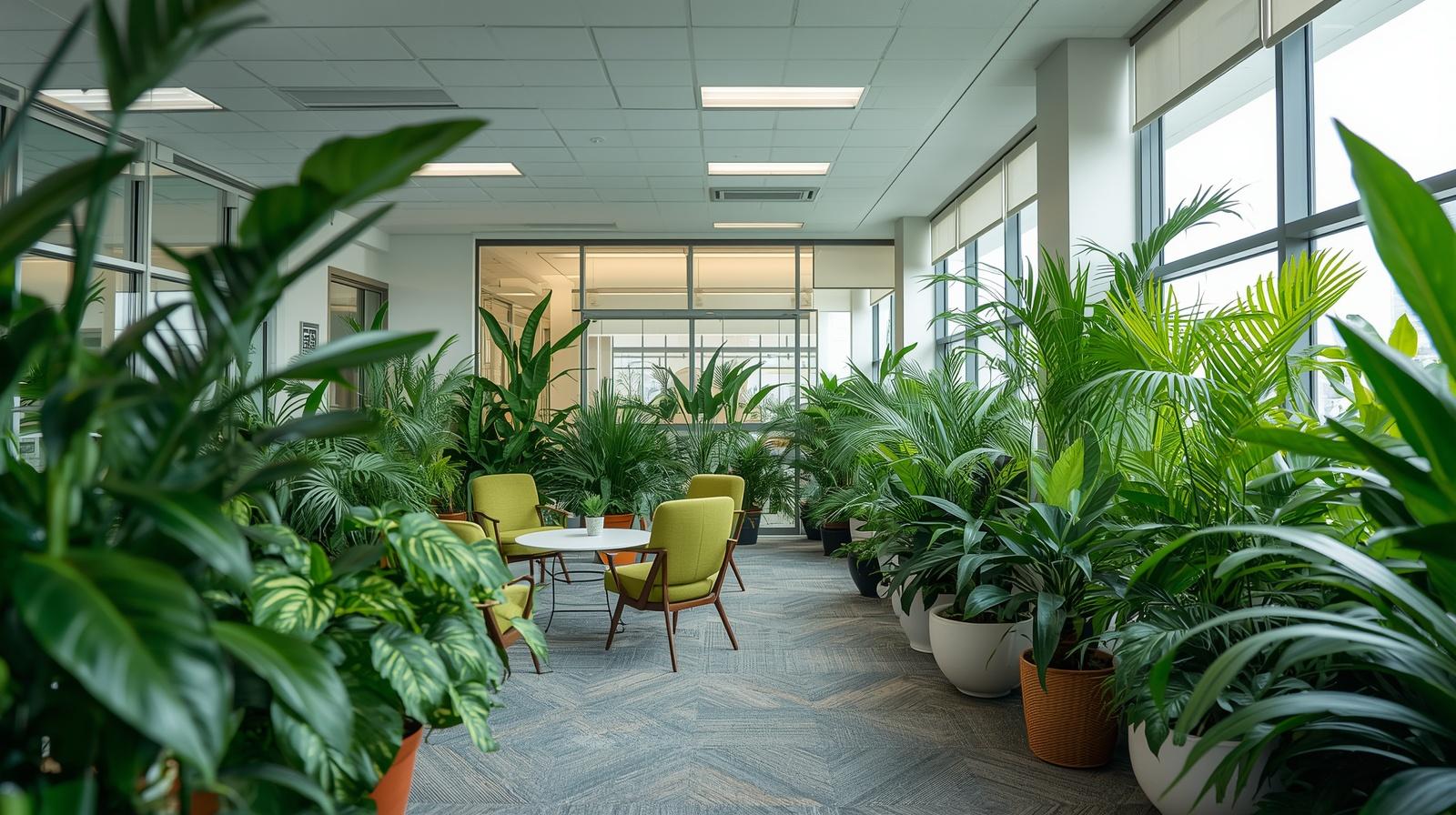
Develop quiet spaces that incorporate:
- Plants
- Natural light
- Comfortable seating
- Nature-inspired design
These areas give employees opportunities for cognitive reset during the workday.
3. Encourage Outdoor Breaks and Walking Meetings: Even short periods outdoors can help reduce mental fatigue and improve focus.
4. Incorporate Biophilic Design Principles: Natural materials, greenery, sunlight, and nature-inspired visuals can improve how employees experience the workplace environment.
5. Support Gardening Initiatives: Community gardens, rooftop gardens, or employee wellness gardening projects can strengthen both well-being and team connection.
6. Normalize Recovery and Mindfulness: Nature-based wellness works best when organizations actively support moments of recovery, restoration, and mental reset throughout the day.
The Future of Workplace Wellness
The future of leadership will increasingly require organizations to think differently about human performance. High-performing cultures cannot be sustained solely through pressure, urgency, and constant connectivity. Sustainable performance requires environments that support focus, recovery, creativity, and emotional well-being.
Nature is emerging as one of the most practical and evidence-based tools available to support those outcomes. For leaders, the opportunity is significant.
The organizations that prioritize mental wellness proactively (not reactively) will likely be the organizations that are best positioned to retain talent, strengthen culture, and maintain long-term performance in an increasingly demanding world. Sometimes meaningful transformation begins with sophisticated technology and large-scale innovation.
And sometimes it begins with something much simpler:
A
plant
in
a
workspace.
A
garden
employees
can
gather
around.
A
workplace
designed
to
help
people
breathe,
think,
and
function
better.
The science is becoming increasingly clear: when organizations reconnect people with nature, they also reconnect people with healthier ways of working and living.
