


Leverage Seasonal Light to Boost Team Performance, Well-Being, and Workplace Productivity
As the days grow longer and natural light becomes more abundant, many people experience a noticeable shift, higher energy, improved mood, and a greater sense of motivation. In the workplace, this seasonal change presents more than just a personal benefit; it offers a powerful, often underutilized opportunity for leaders to enhance team well-being and performance.
Light is not just an environmental factor, it’s a biological driver that directly impacts how people think, feel, and work. For leaders focused on building healthy, high-performing teams, understanding and leveraging seasonal light can be a simple yet highly effective strategy.
Why Light Matters at Work
 Natural
light
plays
a
critical
role
in
regulating
the
body’s
circadian
rhythm,
the
internal
clock
that
controls
sleep,
alertness,
and
energy
levels
throughout
the
day.
When
employees
are
exposed
to
consistent
daylight,
especially
in
the
morning,
their
brains
receive
signals
that
help
align
these
rhythms.
Natural
light
plays
a
critical
role
in
regulating
the
body’s
circadian
rhythm,
the
internal
clock
that
controls
sleep,
alertness,
and
energy
levels
throughout
the
day.
When
employees
are
exposed
to
consistent
daylight,
especially
in
the
morning,
their
brains
receive
signals
that
help
align
these
rhythms.
This alignment influences the production of key hormones like melatonin and serotonin. Melatonin helps regulate sleep, while serotonin supports mood, emotional balance, and overall well-being. When these systems are functioning optimally, employees tend to sleep better, feel more energized, and maintain stronger focus during the day.
In contrast, limited exposure to natural light (common in many indoor work environments) can lead to fatigue, reduced concentration, and lower engagement. Over time, this can impact both individual performance and overall team dynamics.
For leaders, this means that something as simple as light exposure can shape how effectively a team operates.
The Seasonal Advantage for Leaders
Spring and summer bring a natural increase in daylight, creating an ideal window to reinforce healthy rhythms across your team.
During darker months, employees often experience dips in energy and motivation due to reduced sunlight. As daylight increases, the brain begins to recalibrate, leading to improved alertness, better mood, and more consistent energy levels.
Leaders who recognize and support this shift can help their teams fully capitalize on it. Rather than pushing through fatigue or relying solely on external motivators, teams can operate in closer alignment with their natural biology. This creates a more sustainable foundation for productivity, one that doesn’t depend on burnout or constant pressure.
Light as a Performance Driver
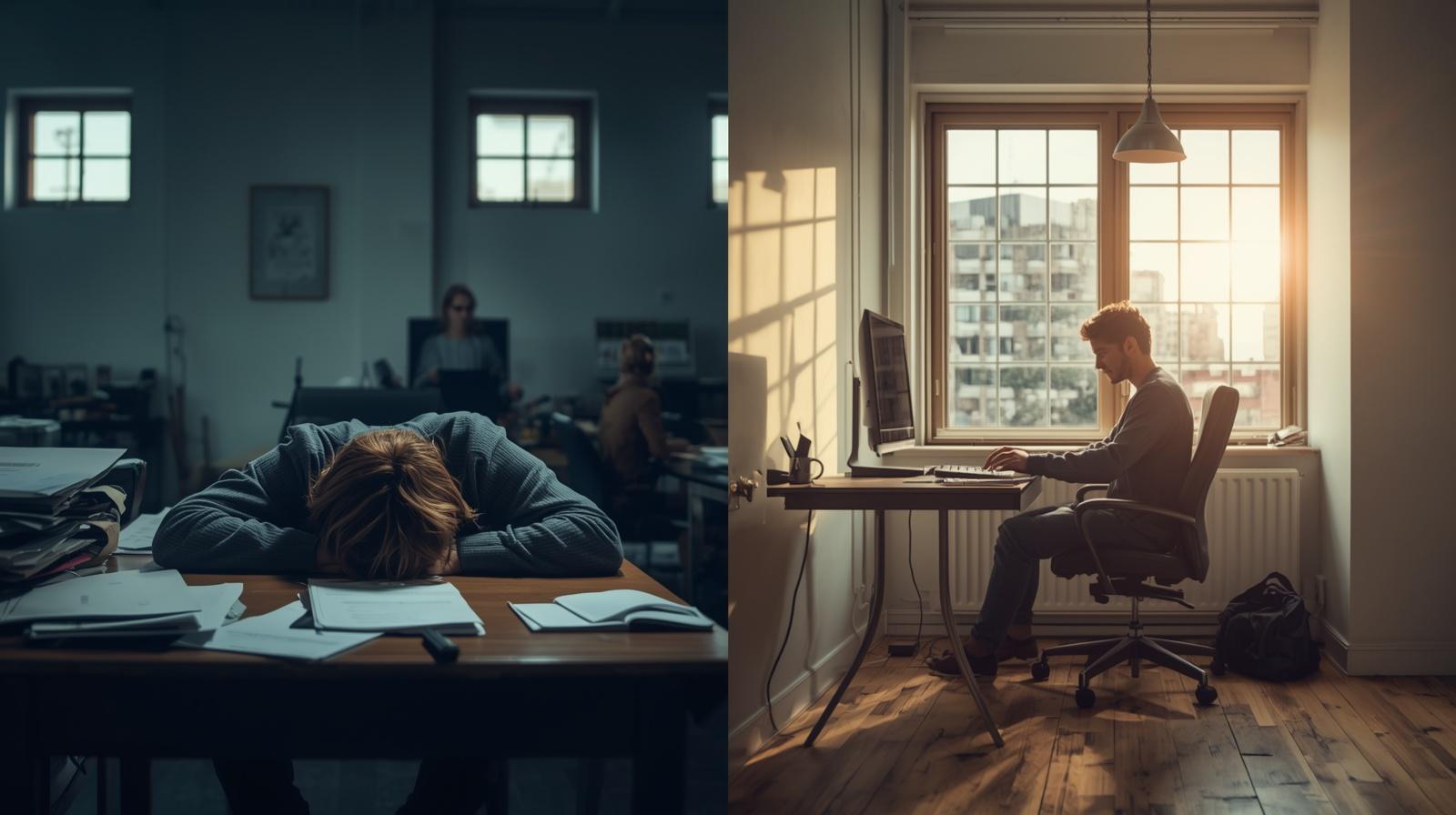
The connection between light and productivity is both direct and measurable. Employees who are regularly exposed to natural light tend to demonstrate:
- Stronger focus and attention
- Faster cognitive processing
- Improved decision-making
- More consistent energy throughout the day
These benefits are not the result of effort alone, they reflect a brain that is functioning under optimal conditions.
For teams, this translates into fewer errors, more efficient collaboration, and a greater ability to stay engaged with complex tasks. For leaders, it means less time spent managing fatigue and more time leveraging peak performance.
The Role of Morning Light in Team Readiness
One of the most impactful ways to support your team’s performance is by encouraging exposure to morning light.
Morning daylight acts as a “start signal” for the brain. It helps suppress melatonin, increases alertness, and sets the timing for energy levels throughout the day. When employees begin their day with natural light exposure, they are more likely to feel awake, focused, and ready to contribute.
Leaders can support this in practical ways. Encouraging flexible start routines that allow time for a short walk, promoting walking meetings early in the day, or simply reminding teams of the value of stepping outside in the morning can make a meaningful difference.
Even brief exposure (10 to 20 minutes) can help reset and stabilize the body’s internal clock.
Designing a Light-Supportive Work Environment
Workplace design plays a significant role in how much natural light employees receive. Whenever possible, position workstations near windows or in areas with strong daylight access. Keep blinds open during the day and minimize unnecessary barriers to natural light. Even small adjustments to layout can improve how light flows through a space.
For hybrid or remote teams, leaders can still influence behavior. Encourage employees to work near windows, take breaks outdoors, or adjust their environment to maximize daylight exposure. The goal isn’t perfection; it’s increasing awareness and making light a visible part of workplace wellness conversations.
Encouraging Movement and Outdoor Time
 Longer
days
naturally
invite
more
time
outside,
and
leaders
can
use
this
to
their
advantage.
Longer
days
naturally
invite
more
time
outside,
and
leaders
can
use
this
to
their
advantage.
Encouraging short outdoor breaks during the workday can help employees reset mentally, reduce stress, and return to tasks with improved focus. Walking meetings, outdoor check-ins, or even informal team breaks can reinforce both connection and well-being.
Movement amplifies the benefits of light exposure. When employees combine daylight with physical activity, they support brain function, improve mood, and reduce mental fatigue.
From a leadership perspective, these practices also signal trust and flexibility, two factors that contribute to stronger engagement and team morale.
Supporting Mental Well-Being Across the Team
Light has a profound impact on mental health, which directly influences workplace performance. Increased exposure to natural light is associated with improved mood, reduced stress, and greater emotional stability. For teams, this can lead to better communication, stronger collaboration, and a more positive work environment.
Leaders who prioritize well-being understand that performance is not just about output, it’s about creating conditions where people can think clearly, manage stress, and stay engaged.
By encouraging simple habits like stepping outside, taking breaks, and working in well-lit environments, leaders can help reduce the cognitive and emotional strain that often builds during the workday.
Aligning Work Rhythms with Natural Energy
One of the most effective ways to improve productivity is to align work demands with natural energy patterns. With increased daylight, many employees experience higher energy levels in the late morning and early afternoon. Leaders can use this window for focused work, problem-solving, and collaboration.
Less demanding tasks can be scheduled during lower-energy periods, helping teams maintain momentum without unnecessary strain. This approach reduces reliance on willpower and allows employees to work with their biology rather than against it.
Avoiding Common Workplace Pitfalls
 Despite
the
benefits
of
seasonal
light,
many
teams
fail
to
take
full
advantage
of
it. A
common
issue
is
spending
the
entire
day
indoors
under
artificial
lighting.
While
this
may
be
unavoidable
in
some
roles,
even
small
efforts
to
step
outside
or
sit
near
windows
can
help
offset
the
effects.
Despite
the
benefits
of
seasonal
light,
many
teams
fail
to
take
full
advantage
of
it. A
common
issue
is
spending
the
entire
day
indoors
under
artificial
lighting.
While
this
may
be
unavoidable
in
some
roles,
even
small
efforts
to
step
outside
or
sit
near
windows
can
help
offset
the
effects.
Another challenge is inconsistent routines. Irregular schedules can disrupt circadian rhythms, making it harder for employees to maintain steady energy levels. Leaders can support consistency by encouraging predictable work patterns and respecting boundaries around rest and recovery.
Finally, it’s important to consider evening habits. While bright daylight supports alertness, excessive exposure to artificial light at night, especially from screens, can interfere with sleep. Encouraging healthy boundaries around work hours can help protect the benefits gained during the day.
Building a Culture of Energy Awareness
Leaders have a unique opportunity to shape how teams think about energy, not just time. By recognizing the role of environmental factors like light, leaders can move beyond traditional productivity models and adopt a more holistic approach to performance.
This might include:
- Normalizing outdoor breaks as part of the workday
- Encouraging flexible routines that support morning light exposure
- Designing spaces and schedules that align with natural rhythms
- Talking openly about energy, focus, and well-being
These shifts don’t require large investments, but they can have a lasting impact on how teams function.
A Simple, Powerful Leadership Lever
.jpg) In
a
world
filled
with
complex
solutions
for
productivity
and
well-being,
natural
light
stands
out
for
its
simplicity.
In
a
world
filled
with
complex
solutions
for
productivity
and
well-being,
natural
light
stands
out
for
its
simplicity.
It’s accessible, cost-free, and deeply aligned with how the human brain is designed to function. When leaders intentionally incorporate light into their workplace strategies, they create an environment where people can perform at their best, without added pressure.
As the seasons change, the opportunity is already there. Open the blinds. Step outside. Encourage your team to do the same. Because sometimes, the most effective way to improve performance isn’t by adding more, it’s by working with what’s already available. A little more light might be exactly what your team needs to thrive.
